Climb through misty trails, sacred legends, and glowing sunrise skies to reach Sri Pada — a place where faith, history, and nature come together on Sri Lanka’s most revered mountain.


About Sri Pada
Sri Pada, also known as Adam’s Peak, is a 2,243 m (7,359 ft) conical sacred mountain located in central Sri Lanka. This iconic peak holds the most religious importance, drawing pilgrims and travellers worldwide to Sri Lanka. At its summit lies a sacred footprint embedded in rock, which is felt with deep respect by followers of different faiths:
- Buddhists believe it to be the footprint of the Buddha.
- Hindus associate it with Lord Shiva or Hanuman.
- Muslims consider it to be Adam’s footprint.
- Christians sometimes associate it with St. Thomas.
Historical and Religious Importance
Sri Pada’s sacred legacy dates back centuries and has been celebrated in texts, folklore, and historical records:
- Buddhist Tradition: The Mahawamsa chronicles state that the Buddha visited Sri Lanka and left his footprint at Sri Pada at the invitation of deity Sumana Saman, the mountain’s guardian.
- Historical Mentions:
- Chinese traveller Fa Hien (411 CE) documented its significance during his visit to Sri Lanka.
- Marco Polo (1298 CE) recognised the mountain as a key pilgrimage site.
- Explorer Ibn Battuta (1344 CE) described the stairways and iron chains aiding pilgrims in their ascent.
- Royal Pilgrimages: Kings such as Vijayabahu I (1058–1114) and Nissanka Malla (1187–1196) ascended the peak to worship at the summit and promoted pilgrimages.
The Pilgrimage
The pilgrimage to Sri Pada is an ancient tradition that continues to this day. The season begins on the full moon of December and ends in May – Vesak Poya Day, with thousands making the climb to witness the Ira Sevaya (sunrise shadow phenomenon). Pilgrims often aim to reach the summit before dawn to experience this breathtaking view.
Trails Leading to Sri Pada
There are six main trails to the summit, each offering unique challenges and beauty:
- Hatton-Nallathanni Trail (Raja Mawatha)
- The most popular and easiest route.
- Elevation Gain: 939.4 m
- Distance: 5 km | Time: 5 hours
- Ratnapura-Palabaddala Trail
- The oldest and challenging route, known for landmarks like Seetha Gangula (icy river).
- Elevation Gain: 2,000 m
- Distance: 8.5 km | Time: 8–12 hours
- Kuruwita-Erathna Trail
- A scenic but difficult route passing Warnagala Rock and waterfalls.
- Elevation Gain: 1,850 m
- Distance: 12 km | Time: 8–12 hours
- Deraniyagala-Udamaliboda Trail
- A remote and forested trail requiring trekkers to cross streams and rivers.
- Elevation Gain: 1,700 m
- Distance: 12 km | Time: 8–12 hours
- Rajamale-Murraywatta (Via Sandagalathanna) Trail
- The shortest and least strenuous route starts from the Murray Estate.
- Elevation Gain: 640 m
- Distance: 5 km | Time: 2 hours
- Dehenakanda-Mukkuwaththa Trail
- A lesser-known trail was established in 1933. ( Most difficult and the most beautiful trail )
- Elevation Gain: 1445 m
- Distance: 18.39 km | Time: 36 hours
Sri Pada Season vs. Off-Season – What’s the Difference and Why It Matters
Knowing the difference between the Sri Pada pilgrimage season and the off-season is very important, especially if you want a safe and meaningful journey.
When Does the Sri Pada Season Start and End? 📅
- Season begins: Unduwap Poya Day (December)
- Season ends: Vesak Poya Day (May)
During this period, thousands of pilgrims climb the sacred mountain day and night.
Pilgrimage Season (December–May) 🌟
Why It’s the Best Time to Visit
✔ Calm weather:
The climate becomes peaceful, with fewer heavy rains. People believe this is when God Sumana Saman blesses the pilgrims and allows them to worship the sacred footprint.
✔ Routes are fully lit:
Both the Hatton route and Ratnapura route glow beautifully at night with lights all the way up.
✔ No permits needed:
You can start your climb from any route without special permissions.
✔ Access to Uda Maluwa:
Only during the pilgrimage season, visitors are allowed to enter the Uda Maluwa and worship the sacred Sri Pada.
⚠ Important: Photography and videography are strictly prohibited in the Uda Maluwa area.
✔ Shops everywhere:
Many shops open along the trail until you reach Asala Kanuwa, the final shop area before the summit — on both the Hatton and Ratnapura routes.
Downsides of the Season ⚠
❌ Heavy crowds:
The paths can be extremely crowded, so expect slow movement and long waiting times.
❌ Trash issues:
Many visitors throw rubbish along the trail, which sadly harms the beauty of the mountain.
❌ Water sources are not clean:
Due to overcrowding and people urinating everywhere, natural water sources become unsafe for drinking.
❌ Toilets are difficult to use:
Toilets are available but not easy to use during peak crowds.
Still, the Sri Pada season is the best time for a safe, traditional, and spiritual pilgrimage.
Special Tip ✨
If you climb on 31st December, you can watch the first sunrise of the new year from the top of Sri Pada — an unforgettable experience.
Important Notice ⏰
Every Saturday and Wednesday, from 4:00 pm to 5:00 pm, the Uda Maluwa is closed for the Kemmura Pujawa.
Off-Season (May–December) 🌧
The off-season begins right after Vesak. This is when the mountain starts to reclaim its peace.
Why the Off-Season Is Risky
❌ Heavy rains:
Rainfall is extremely strong, turning the staircase into a powerful waterfall, making it dangerous to climb.
❌ Shops are closed:
Most shops built with temporary wooden structures are removed or destroyed by the rain.
❌ Permits required:
To climb during the off-season, you must get permission:
- Nallathanniya Police Station (Hatton side)
- Palabaddala Police Station (Rathnapura side)
All other routes are restricted during the off-season.
❌ Uda Maluwa is locked:
You cannot enter the sacred area or worship close to the footprint.
You may only worship outside the Idamaluwa boundary.
❌ Very few pilgrims:
Only experienced and physically strong climbers attempt the off-season journey.
But the Off-Season Has a Beautiful Side Too 🍃
If you choose to climb near the end of the off-season, you will see:
🌿 Clean, fresh nature — the rains wash away all the trash
🌧 Softer, lighter rain instead of heavy storms
⛰ Beautiful waterfalls everywhere
🌸 Flowers blooming all around the mountain
💧 Pure natural water that you can safely drink
This period shows the true natural beauty of Sri Pada, without crowds.


Spiritual Tip 🙏
Before starting an off-season climb, silently ask for permission and blessings from God Sumana Saman in your mind. This is a long-standing belief among pilgrims.
Key Attractions at Sri Pada
The Sacred Footprint
Sri Pada is one of the most frequently mentioned sacred sites in the earliest Pali chronicles. It appears in records as early as the 4th century, and again in the 5th-century chronicles, which state that Lord Buddha visited this mountain peak.
Many famous travellers have also documented Sri Pada in their writings. The Arab explorer Ibn Battuta, who arrived in Sri Lanka in 1344 CE, recorded his journey to the peak. Marco Polo also mentioned Sri Pada during his travels. Later, in 1817, John Davy became the first English traveller to visit the summit and wrote about seeing an oversized footprint carved into the rock, decorated with a brass frame and studded with gems.
The Magical Ira Sevaya – Sunrise Wonder of Sri Pada
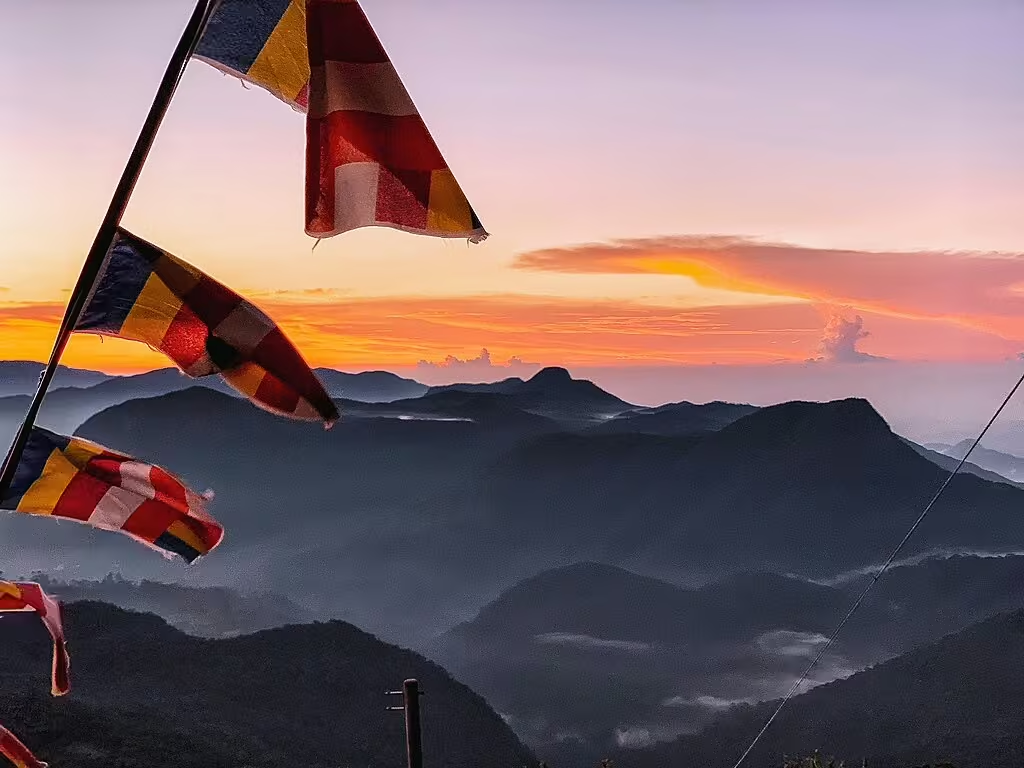
One of the most beautiful sights you can witness at Sri Pada (Adam’s Peak) is the Ira Sevaya — a rare and colourful sunrise phenomenon seen just before the sun appears. Many people say it is one of the most stunning visual experiences in the world.
When you look at the eastern sky early in the morning from the summit of Sri Pada, you will see the colours of the sky changing very quickly. The horizon turns into a moving painting with shades of orange, red, purple, pink, and gold. It feels like watching an artist creating a new artwork in real time.
As the sky changes, multiple reflections of the sun appear one after another above the horizon. These are not the real sun, but optical images created by the atmosphere. Several bright shapes appear in different places before the actual sun rises.
Because of this, many pilgrims — even monks and educated visitors — believe the sun “bows” or “worships” the sacred footprint of Lord Buddha three times before rising. This belief comes from ancient legends, and since the phenomenon is hard to explain with simple words, many still hold onto this beautiful interpretation.
Although it is a natural optical effect caused by the atmosphere, the spiritual feeling it creates is very real. Watching the Ira Sevaya at Sri Pada is a deeply peaceful and unforgettable moment, mixing nature, faith, and cultural belief in one magical sunrise.
Indikatu Pana / Geththam Pana (Needle Point)
Indikatu Pana (Needle Point), where it is believed that the Buddha tore his robe when he was going to establish the Siripa sign. Then lord Buddha stopped to sew his robe. Legends say that Maraya, the demon, tried to disrupt the process by causing a downpour of rain. Therefore, to symbolise that, people who worship Kodu for the first time attach the thread to the needle and knit at there to commit more of that.
This tradition is performed at several points along the trails, such as Ratnapura and Hatton routes. On the Hatton route, pilgrims extend the thread upward until it runs out, symbolising continuous effort and progress.
The Haramitipana Ritual
At Haramitipana, pilgrims offer a small branch (called Haramitiya) as a symbol of prayer, wishing for an easy and safe journey, and it also includes a wish that they could see Siripa every season until they need Haramittiya to walk. It is customary to make a vow here, promising to avoid wrongdoing and asking for divine blessings for the challenges ahead.
Arriving at the Summit (Uda Maluwa)
Upon reaching the sacred summit, the Nade Guru organises the KODU pilgrims in a row and places a white cloth (jatawa) over their heads. Pilgrims then circle the sacred footprint three times in reverence before bowing down with great devotion. At this point, the Nade Guru leads each pilgrim to touch their heads to the sacred footprint, guiding them in prayerful worship.
Key Reminders at the Sacred Summit
It is essential to remember that the Sri Pada Footprint is a sacred relic (Paribhogika Dhaatu). Therefore, pilgrims should never place money or coins directly on the footprint. Instead, donations should be made in the designated offering box nearby.
Pilgrims recite the Sri Pada Vandana Gatha at this time, which carries deep meaning:
“Kalyanito gaganato muniyattha gantva
Dasseyi cakkavala-lakkhana padalancham,
Lanka-mahivara-vadhu makutopamanan
Vandamaham Sumana-kuta siluccayantam.”
(Translation: If there is any footprint of the wise lord Buddha located in the sand belt of the Narmada river, Sachchabaddha rock, Sumana Koota, or Yonaka Pura, I worship it with my heart.)

The Sacred Tradition of Sri Pada Pilgrimage🙏
The Sri Pada pilgrimage is one of Sri Lanka’s most meaningful spiritual journeys. For Buddhists, it is a chance to honour the sacred left footprint of Lord Buddha, known as the Paribhogika Dhaatu, by climbing the holy mountain Samanala Kanda (Adam’s Peak). This sacred ascent is both a religious tradition and a beautiful nature experience, filled with devotion, legends, and breathtaking views.
This journey has its own fascinating cultural traditions, which are unique to the Sri Pada pilgrimage. What makes it even more special is that there is no religious or ethnic barrier—people of all faiths and backgrounds can partake in this pilgrimage. Even for those from different religions, engaging in the rituals associated with Sri Pada becomes a beautiful and unforgettable experience, offering something unparalleled anywhere else in the world.
Interestingly, many foreign visitors who come for the Sri Pada pilgrimage knowingly or unknowingly follow these cultural traditions, enjoying this sacred experience. Therefore, it’s important for us to observe these rituals consciously and understand their significance.
Kodu Rituals Before Starting the Sri Pada Pilgrimage
The journey to Sri Pada is not an ordinary hike. It is a sacred pilgrimage, and there are several traditional rituals that pilgrims—especially first-timers—follow before beginning the climb.
Preparing Yourself
Before you start your pilgrimage, you must prepare both physically and spiritually:
- Be a vegetarian for at least one week before the journey. Avoid meat and similar foods as a form of purification.
- Clean yourself properly the day before you start.
- Wear white clothing, preferably long-sleeved and modest (avoid shorts).
- Control your words and behaviour during the climb. Avoid bad words, negative habits, or anything considered impure.
Who Are the “Kodu” Pilgrims?
First-time pilgrims are known as “Kodu” people, and they are divided into three types:
- Kiri Kodu – Children or very young pilgrims
- Nambara Kodu – Young or middle-aged pilgrims
- Dandu Kodu – Elderly first-timers
A group that begins the pilgrimage together is called a “Nadaya”, and the leader of this group is known as the “Nade Gura.”
What a Kodu Must Bring
Here are the important items a first-time pilgrim should carry:
- A needle and a ball of yarn – For threading a needle at Indi Katu Paana
- Lemon – To apply lemon juice to your head at Seetha Gangula before washing
- A clean white dress – To wear after bathing at Seetha Gangula
- Slaked lime (chunam) – For chewing betel (bulath wita)
- Coins and small white cloth pieces – For Panduru offerings
- Aggala – To eat at Maha Giri Dambaya
- A warm jersey and an ice cap – To stay warm in the cold climate
- Water bottle
- Coconut oil – For the Dolos Mahe Pahana oil lamp
And most importantly:
Do not leave anything behind.
Steps of the Ritual
Purification at Seetha Gangula
At Seetha Gangula, pilgrims:
- Apply lemon juice to their heads
- Bathe and cleanse themselves
- Change into clean white clothing
This marks the spiritual beginning of the pilgrimage.
Completing the Pilgrimage at the Peak
After reaching the summit of Sri Pada:
- Place your forehead on the sacred footprint
- Offer your Pandura—a coin wrapped in white cloth
- Apply coconut oil to the Dolos Mahe Pahana
- Ring the giant bell (Gantaraya) according to the number of times you have visited Sri Pada
Environmental Responsibility
A critical reminder to all pilgrims is the importance of environmental preservation. Particularly at Indikatu Pana, excessive threads, plastic, and other waste have polluted the area. Pilgrims are urged to use biodegradable materials when performing rituals and refrain from leaving harmful items behind. The beauty and sanctity of Sri Pada must be protected for generations to come.
How to Get to Sri Pada
NOTE: These details were last updated on 17.12.2024
🚆 Train and Bus Details for Hatton & Nallathanniya Travellers
Colombo to Hatton (Train Time Table)
| Train | Departure (Colombo) | Arrival (Hatton) |
|---|---|---|
| Podi Menike | 5:55 AM | 11:14 AM |
| Udarata Menike | 8:30 AM | 1:19 PM |
| Tikiri Menike | 12:40 PM | 8:03 PM |
| Night Mail | 8:30 PM | 2:20 AM |
Hatton to Colombo (Train Time Table)
| Train | Departure (Hatton) | Arrival (Colombo) |
|---|---|---|
| Tikiri Menike | 7:25 AM | 1:47 PM |
| Udarata Menike | 10:28 AM | 3:32 PM |
| Podi Menike | 1:29 PM | 6:44 PM |
| Rajadhani Express | 3:31 PM | 8:06 PM |
| Night Mail | 12:35 AM | 5:24 AM |
🚆To plan your trip with public transportation in Sri Lanka, visit Sri Lanka Railways for train schedules.
🎟️ Train Ticket Prices (Colombo to Hatton):
- 2nd Class: Rs. 650
- 3rd Class: Rs. 320
🚌 Transport to Nallathanniya:
- Hatton Railway Station has direct buses to Nallathanniya.
- Alternatively, take a bus from Hatton Bus Stand or Maskeliya to Nallathanniya.
🏠 Accommodation Options:
Plenty of budget-friendly lodges and rest stops are available in Nallathanniya.
🛤️ From Ratnapura – Sri Palabaddala Route
This scenic and historical route takes you through beautiful locations like Lihinihela, Dharmarajagala, and Makara Thorana.
Bus Time Table (Route 477: Ratnapura – Sri Palabaddala):
| Ratnapura to Palabaddala | Palabaddala to Ratnapura |
|---|---|
| 5:30 AM | 5:00 AM |
| 6:30 AM | 5:30 AM |
| 7:00 AM | 6:00 AM |
| 7:30 AM | 6:30 AM |
| 8:00 AM | 7:00 AM |
| 8:40 AM | 8:00 AM |
| 9:40 AM | 8:30 AM |
| 11:00 AM | 10:00 AM |
| 12:20 PM | 11:30 AM |
| 1:20 PM | 12:50 PM |
| 4:00 PM | 3:00 PM |
| 6:10 PM | 5:30 PM |
| 7:15 PM | 6:00 PM |
⏳ Travel Time: Approx. 1 hour 20 minutes
📍 Distance: 24 km
🛤️ Kuruwita to Adavi Kanda (Bus Service)
| Departure Times |
|---|
| 6:00 AM, 7:10 AM, 7:30 AM, 8:45 AM, 9:10 AM, 9:30 AM |
| 10:40 AM, 12:00 PM, 1:35 PM, 2:20 PM, 3:50 PM, 5:10 PM, 6:05 PM |
📝 Tips for Travellers
- Prefer CTB buses for safety and reliability.
- Online or station ticket bookings are available for trains.
- If you’re driving, parking facilities are accessible in all key areas.
Tips for Pilgrimage
- Best Time: Visit between December and April, preferably on weekdays to avoid large crowds.
- Timing: Start your climb at night to reach the summit by dawn and witness the Ira Sevaya.
- Gear Up:
- Comfortable hiking shoes
- Warm clothing (it gets very cold)
- A flashlight or headlamp
- Water and snacks
- Respect the Sacredness: Many pilgrims climb barefoot as a sign of devotion. Maintain silence and respect the journey of others.
Sri Pada live weather update 🛰️
Plan Your Adventure: Explore Our Interactive Map!
To make your journey even easier, check out our interactive map, where we’ve marked all these amazing destinations. Use it to plan your trip and discover more hidden gems in Sri Lanka!
To plan your trip with public transportation in Sri Lanka, visit Sri Lanka Railways for train schedules.
Special Thanks to Fantastic Travelers Facebook Page for sharing the details.
🌍 Stay Updated With the Sri Lanka Travel Community
Before you plan your next trip, make sure to check out the Sri Lanka Travel Community on Visit Ceylon:
👉 https://www.visitceylon.net/community/
This community page is updated regularly with:
- 📰 Latest travel news
- 🚧 Route updates & warnings
- 🌧️ Weather alerts
- 🛣️ Road and trail conditions
- 🏕️ Recent travel experiences shared by others
It’s one of the best ways to stay informed before you travel anywhere in Sri Lanka.
❓ Got a Travel Question? Ask the Community!
If you have any travel-related questions, such as:
- Best routes
- Weather conditions
- Safety updates
- What to pack
- Hidden places
- Transport tips
…you can simply ask inside the community.
Friendly travellers will share their experiences and help you out. 🙌