Hidden beneath mist, stone, and centuries of devotion, the ancient iron chains of Sri Pada tell a story far older than colonial history—one of kings, pilgrims, and advanced Sri Lankan engineering that still holds strong today.
In recent days, there has been a lot of discussion about the ancient iron chains and stone steps that were revealed after the landslide near Ehala Kanuwa on the Hatton route to Sri Pada.
Many people think these chains belong to the early 1900s or the colonial period, but that is not true.
These remains are much older—possibly going back hundreds or even thousands of years.
It is also very likely that more such ancient remains are still buried under the forests along the Hatton route.
So, this discovery is not surprising, especially for those who know the history of Sri Pada.
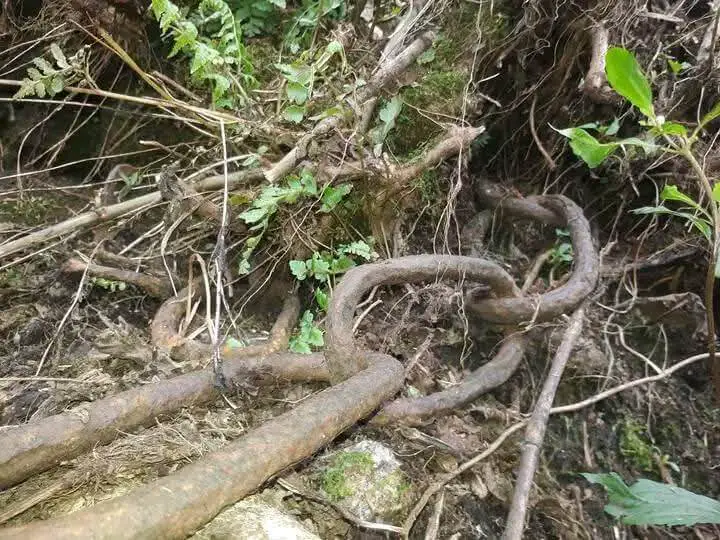
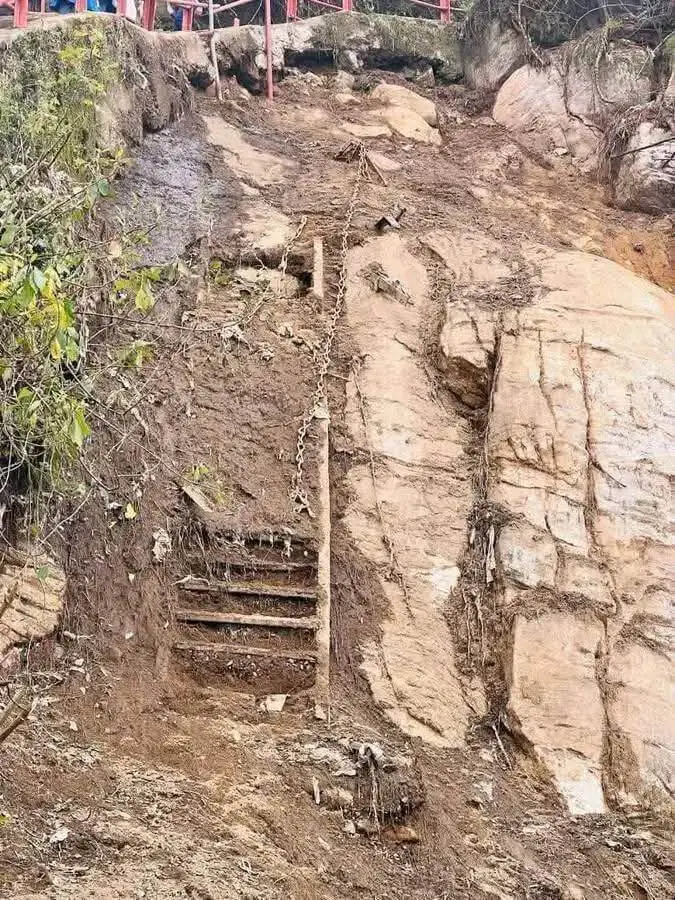
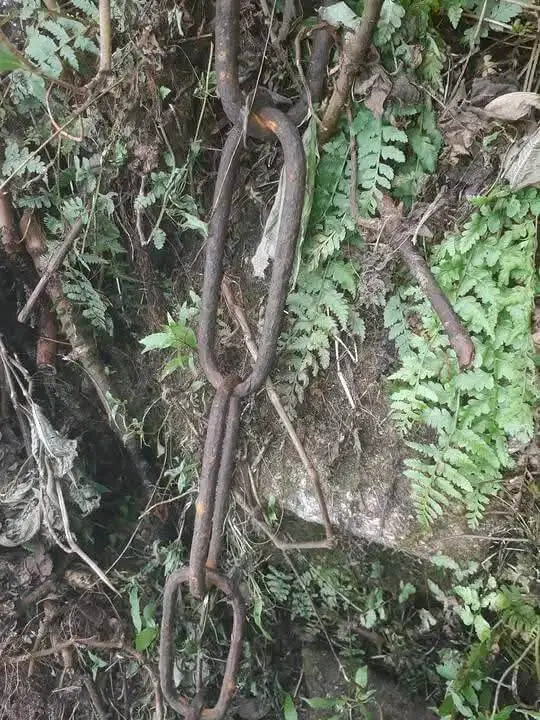
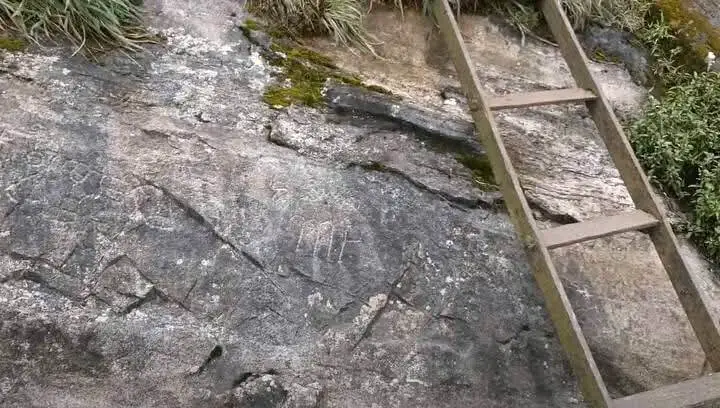
Similar Iron Chains on the Ratnapura Route 🏔️
If you have climbed Sri Pada via the Ratnapura (Palabaddala) route, especially the Mahagiridamba section, you may have already seen:
- ⚙️ Large and small iron chains
- 🪨 Iron steps fixed directly into rock
- 📍 Near Ehala Kanuwa – Sulan Kapolla area
These chains are embedded deep into the rock and are still very strong, even today.
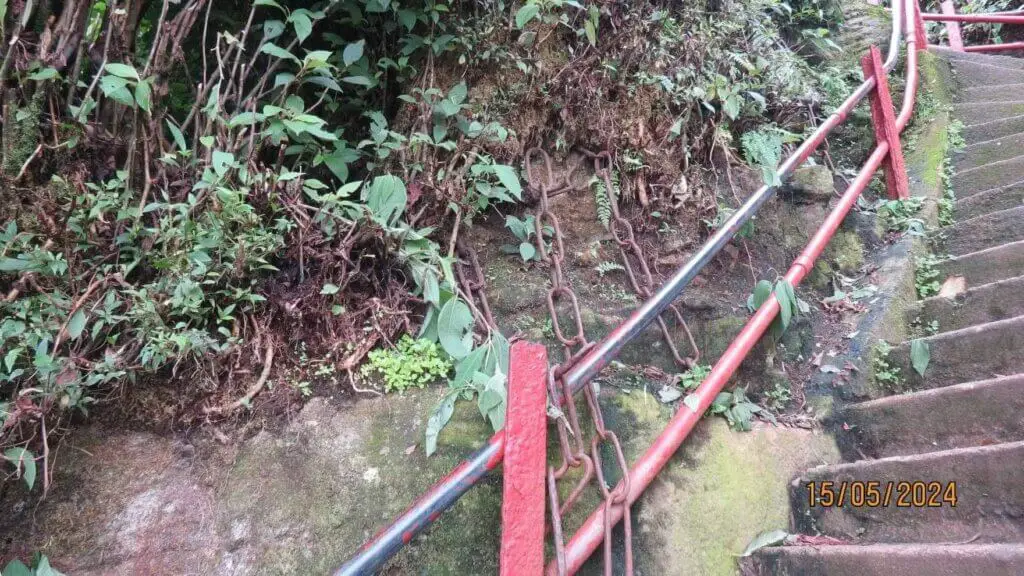
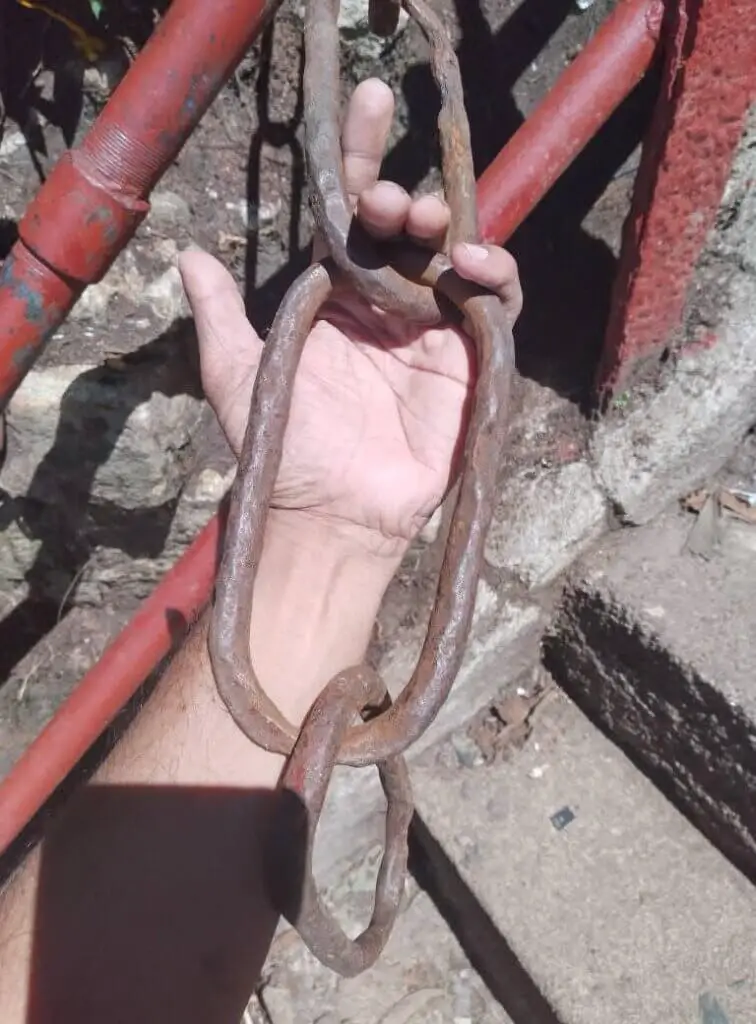
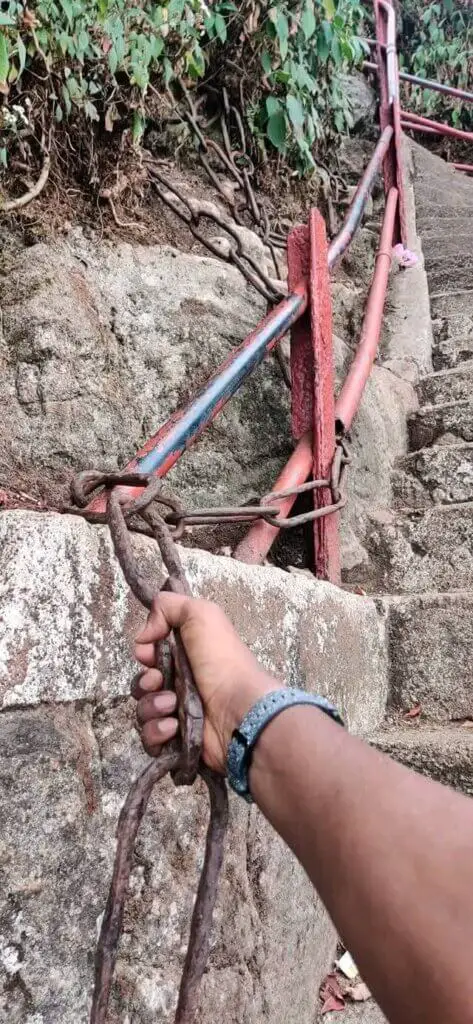
What Makes Them Special? 🔍
- ❌ No visible joints or welding marks
- ✅ Looks like they were carved from a single piece of iron
- 🧱 Despite centuries of sun, wind, rain, and cold,
they are still over 70% structurally strong
This shows advanced iron technology for that time.
Are These Colonial-Powered? 🕰️
At first glance, one might think this ironwork came from the colonial period.
But historical records prove otherwise.
📖 Early explorers, foreign travellers, and even colonial officers who climbed Sri Pada
recorded these iron chains as strange and unfamiliar to them.
Some reports suggest these structures:
- They are over 1,000–1,500 years old
- At the very least, older than 500 years
Even though their exact age is not officially dated, they clearly predate modern colonial construction.
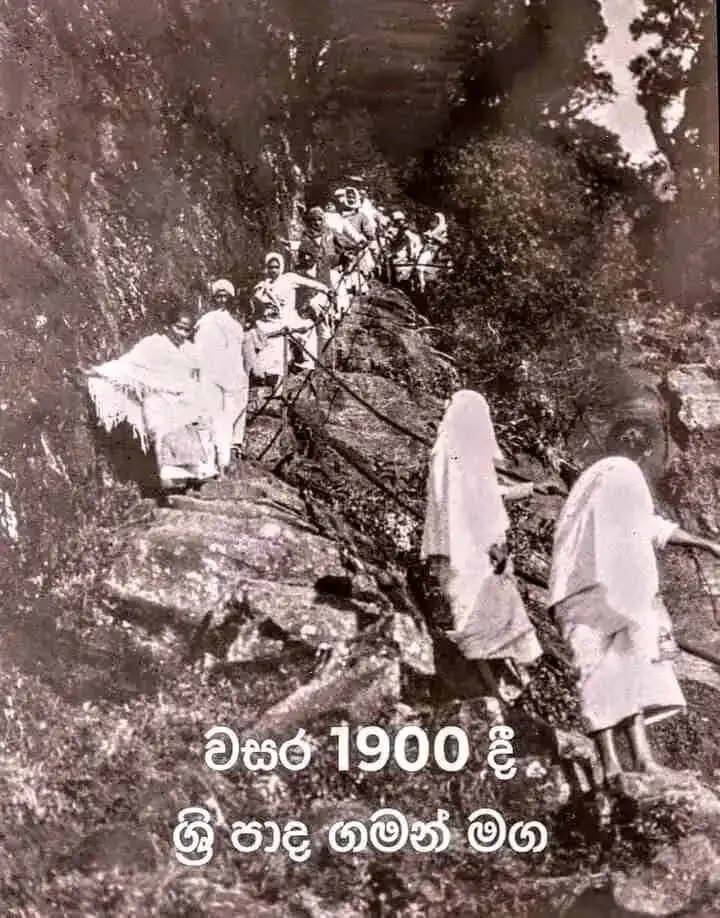
Old Photographs Tell Another Story 📸
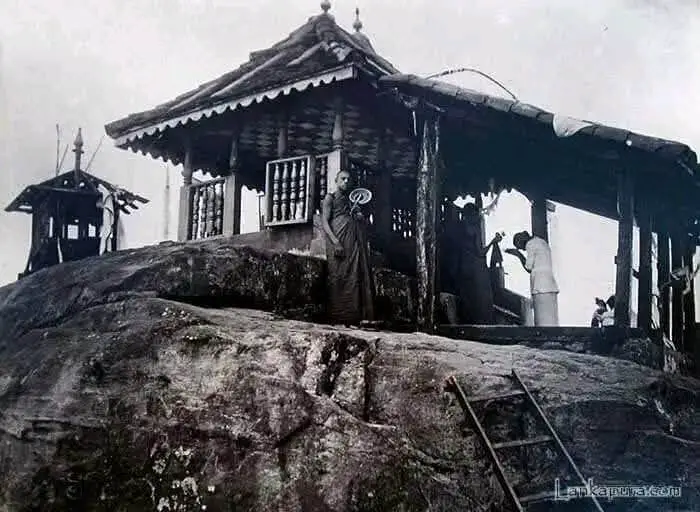
Black-and-white photographs from the early 1900s show:
- Ehala Kanuwa
- Udamaluwa
- Sections of the Hatton route
However, in these photos:
- ❌ No iron chains or ladder-based climbing is visible
This suggests that the major step of development on the Hatton route happened later, mainly for plantation access.
Why Ratnapura Route Needed Iron Chains 🚶
The Hatton Mahagiridamba:
- Long distance
- Gentle slope
- Less dangerous
✅ Easier to climb
The Ratnapura Mahagiridamba:
- Very short distance
- Extremely steep
- Sharp elevation in just a few bends
- Fully exposed to strong western winds
- ❄️ Very cold around Sulan Kapolla
Because of this:
- 🔗 Huge iron chains with thick links were installed
- 🤲 Some chain links are large enough to grip with one hand completely
- These were essential for safe climbing
Royal Origins of the Sri Pada Route 👑
According to legends and inscriptions:
- The Sri Pada Raja Mawatha was rediscovered during King Nissanka Malla’s reign
- This route passed through Gilimalaya – Palabaddala
- It is believed this was the path used by the Buddha himself
This route was historically known as:
⚠️ “Duggamajja” – meaning a very difficult and dangerous path
Because of this hardship:
- King Nissanka Malla later opened the Hatton route to make access easier
📜 Evidence of this is found in:
- Gilimalaya inscriptions
- Ambagamuwa inscriptions
This suggests that different kings, in different periods,
likely built or improved iron chains and steps, depending on access and safety needs.
Sadly, some people also lost their lives during construction and early use.
Ancient Sri Lankan Iron Technology 🔨
If these chains are not colonial-made, then they were:
✅ Produced using ancient Sri Lankan iron technology
Evidence of advanced iron production exists in:
- Balangoda
- Other nearby regions
Even colonial records describe Sri Lankan iron as extremely strong.
A Colonial Account of the Chains 📜
A foreign writer (likely Davy or Spittel) described his climb as follows (summary):
“This section of Samana Mountain is extremely difficult.
We were all hanging onto iron chains.
The wind and cold were unbearable, and the chains were freezing cold.
Some people could not endure it and lost their grip, falling into the abyss.
First, the weak and elderly fell.
Even some strong men later lost their hold and disappeared into the depths.”
This alone shows how dangerous and vital these iron chains were.
What old books say about the iron chains of Sri Pada
1895 – H. W. Cave
About the Iron Chain
The iron chains are very old and badly corroded. The sizes of the chains are not the same. Because of this, many researchers became curious about the ancient history of these iron chains.
Some people believe that Adam himself fixed these chains. This belief is strongly connected with religious traditions.
A Persian poet wrote that around 300 BCE, Alexander the Great and his group came to Serendib (Sri Lanka). According to this story, they fixed iron chains to make it easier to climb the mountain.
Pilgrims used these chains to climb Adam’s Peak, calm their minds, see Adam’s grave, and worship at the sacred site.
Many people believe that these iron chains have a very long history.
In the 13th century, Marco Polo wrote that there was a very high mountain in Ceylon. He said that the path to climb this mountain was very difficult, and iron chains had been fixed to help climbers. Even at that time, it was hard to know who built the chains and their true history.
1860 – E. Tennent
Connection with Alexander the Great
The iron chains fixed to help people climb Sri Pada are very ancient objects.
According to Muhammadan legends, these chains are connected with Alexander the Great.
In the 14th century, the famous explorer Ibn Battuta climbed Sri Pada. While describing his journey, he gave special names to the places he saw.
He called the mountain “Seven Caves” because of the caves found there.
He named the beginning of the climb “Ridge of Alexander.”
These records show that Sri Pada was well known to travellers and historians from many countries, even in very early times.
Climbing with the iron ladder and the chain
Finally, he reached Diyabethma, a place filled with small waterfalls. At that time, the area was covered with fallen leaves and debris.
From there, after about three miles, he came to a place that the Sinhalese people call Awukanagaluwa. This place was also known as “Sky League.”
After this point, the path became very difficult and rocky. Many waterfalls could be seen along the way.
To reach the summit, climbers had to go up narrow stone steps. In some places, they needed to hold iron chains fixed to the rocks in order to climb safely.
1876 officer, formerly of the Ceylon Rifles
About the iron chains
A note from 1876 (by an officer, formerly of the Ceylon Rifles) discusses the iron chains. The early Sri Pada climbers did not record the difficulties of the ascent, but Marco Polo (in 1292) did mention the iron chains. Fifty years later, Iban Bathuna wrote about the same chain. He observed that the chain links differ from each other and said the chains must have been made over 400 years ago, though he did not know who made them.
1805 – R. Percival
Iron Chain
The chain used to climb the mountain was believed by many to have been fixed by Adam. However, it is clear that it was built a very long time ago. Its exact origin cannot be identified, and even the Persians could not understand who built it. It is also unclear whether it was constructed for worship or for some other purpose.
Final Note 🧭
To better understand these iron chains and steps,
I have included official notes, sketches, and old photographs from Sri Pada travellers and officers.
📌 Except for the recently exposed Hatton-route chains,
all others belong to the Ratnapura Mahagiridamba section.
🌍 Stay Updated With the Sri Lanka Travel Community
Before you plan your next trip, make sure to check out the Sri Lanka Travel Community on Visit Ceylon:
👉 https://www.visitceylon.net/community/
This community page is updated regularly with:
- 📰 Latest travel news
- 🚧 Route updates & warnings
- 🌧️ Weather alerts
- 🛣️ Road and trail conditions
- 🏕️ Recent travel experiences shared by others
It’s one of the best ways to stay informed before you travel anywhere in Sri Lanka.
❓ Got a Travel Question? Ask the Community!
If you have any travel-related questions, such as:
- Best routes
- Weather conditions
- Safety updates
- What to pack
- Hidden places
- Transport tips
…you can simply ask inside the community.
Friendly travellers will share their experiences and help you out. 🙌